Digital Library

Access our comprehensive collection of research resources, application notes, and product documentation.

Filter by type

Physiologically relevant iPSC-derived retinal models for ophthalmology research & drug discovery

Our new whitepaper describes how human iPSC‑derived retinal models enable mechanistic studies, toxicity assessment, and improved translational relevance in ophthalmology...

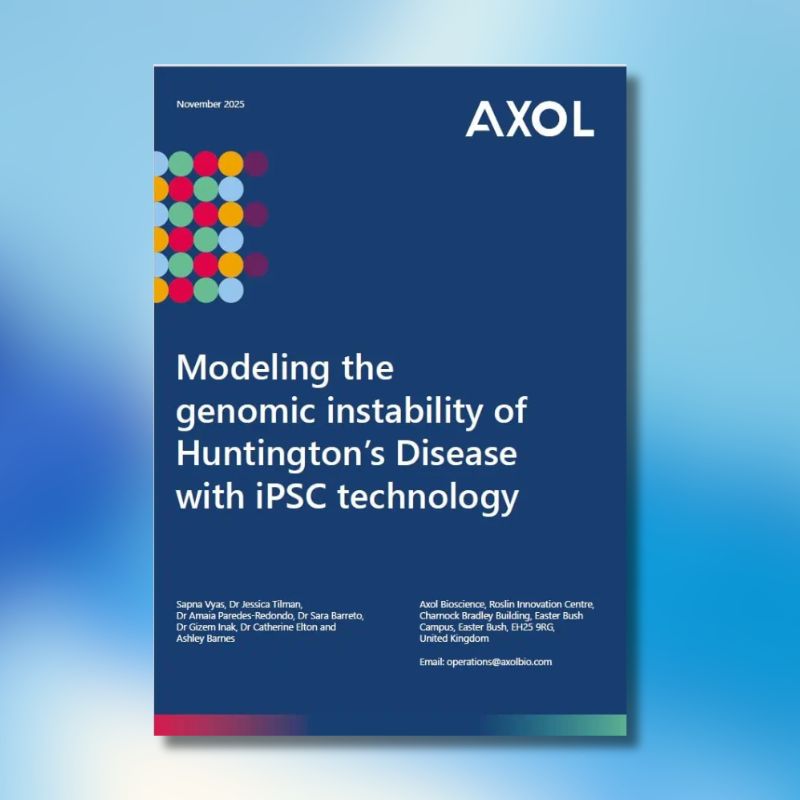
Modeling the genomic instability of Huntington’s Disease with iPSC technology

Axol Bioscience’s iPSC-derived striatal neurons model Huntington’s disease with CAG repeat instability and early-onset phenotypes. This study, we outline the...

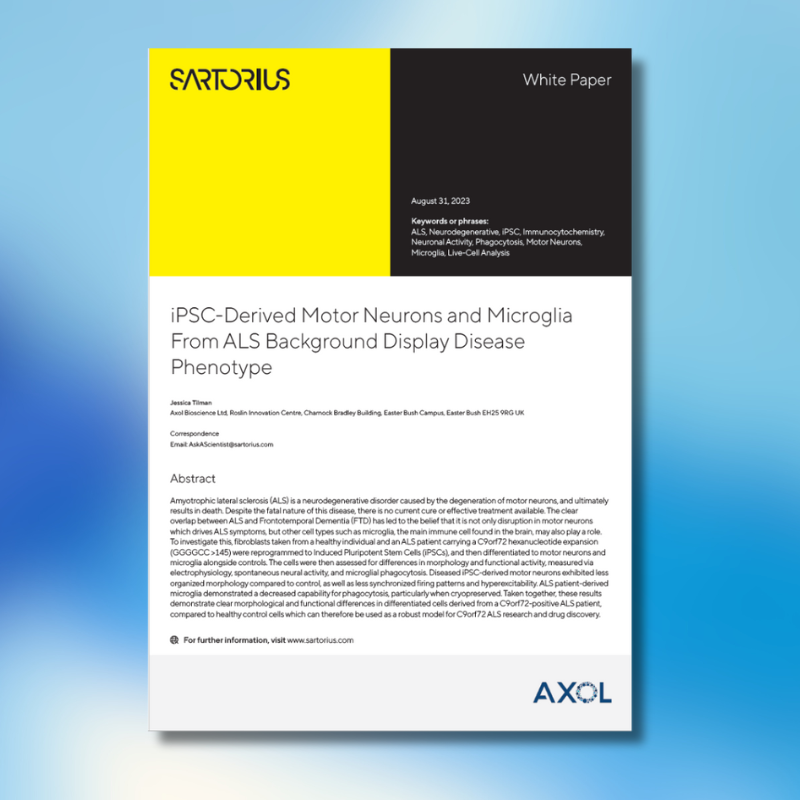
Sartorius – iPSC-Derived Motor Neurons and Microglia From ALS Background Display Disease Phenotype

Explore Axol Bioscience’s iPSC-derived motor neurons and microglia from ALS patients for disease modeling and drug discovery. This whitepaper highlights...

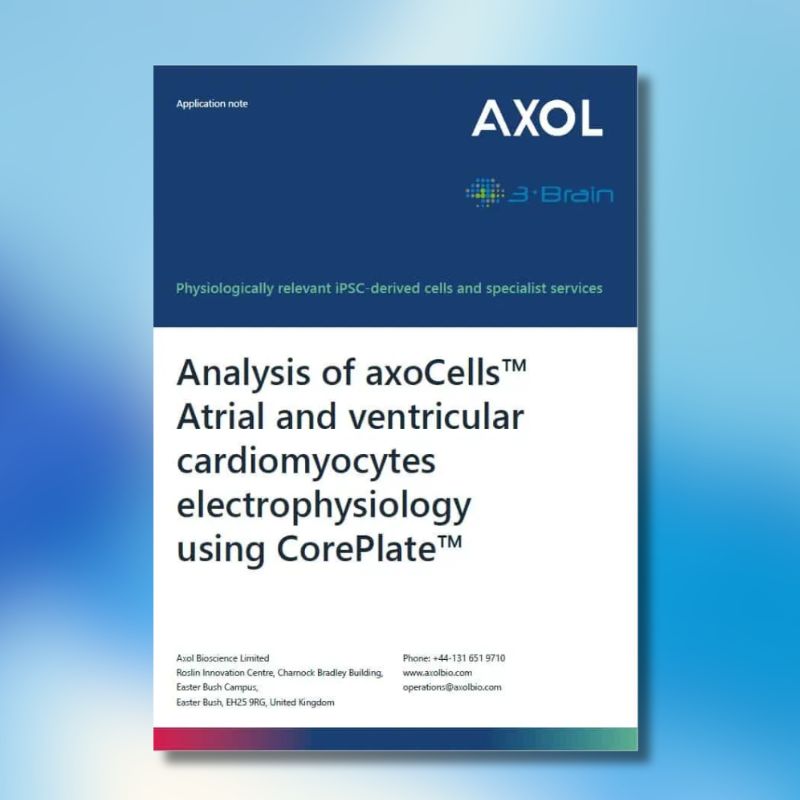
Analysis of axoCells atrial and ventricular cardiomyocytes electrophysiology using CorePlate enabled HD-MEA System

Explore Axol Bioscience’s atrial and ventricular iPSC-derived cardiomyocytes analyzed using 3Brain’s HD-MEA CorePlate system. This application note highlights spontaneous beating,...

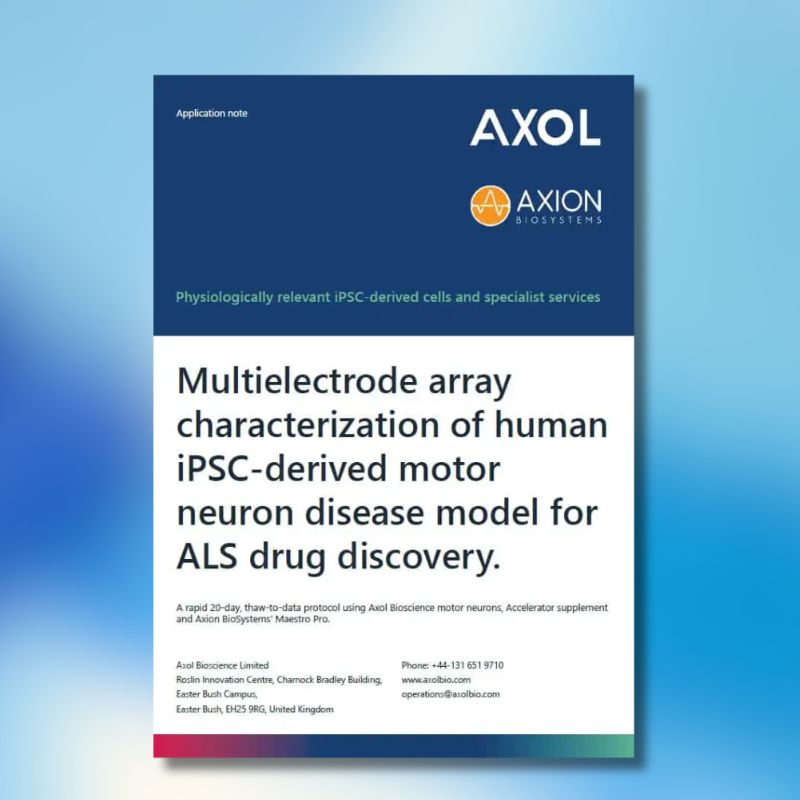
Multielectrode array characterization of human iPSC-derived motor neuron disease model for ALS drug discovery

Explore Axol Bioscience’s iPSC-derived motor neuron model for ALS drug discovery. This application note highlights hyperexcitability, mutation-specific phenotypes, and reproducible...

Functional and Pharmacological Differences Between the Contractility of axoCells™ iPSC-Derived Atrial and Ventricular Cardiomyocytes Assessed on the FLEXcyte 96

Axol Bioscience’s axoCells™ atrial and ventricular iPSC-derived cardiomyocytes reveal distinct contractility and drug responses on the FLEXcyte 96 platform. This...

axoCells™ ventricular cardiomyocytes as functionally-relevant cardiotoxicity models – external validation against CiPA compound panel

Axol Bioscience’s axoCells™ ventricular iPSC-derived cardiomyocytes were externally validated against the CiPA compound panel for cardiotoxicity screening. This study highlights...

Why digital?

Less printing. Lower CO₂. Faster access to the latest science.

● Instant updates, zero waste
● ~95% less paper per brochure